When the California Dream Gets Inherited
For decades, the idea of the California Dream was pretty simple: work hard, build a career, buy a house, and ride the appreciation wave. For a long time, that formula worked.
But the latest numbers suggest something has changed.
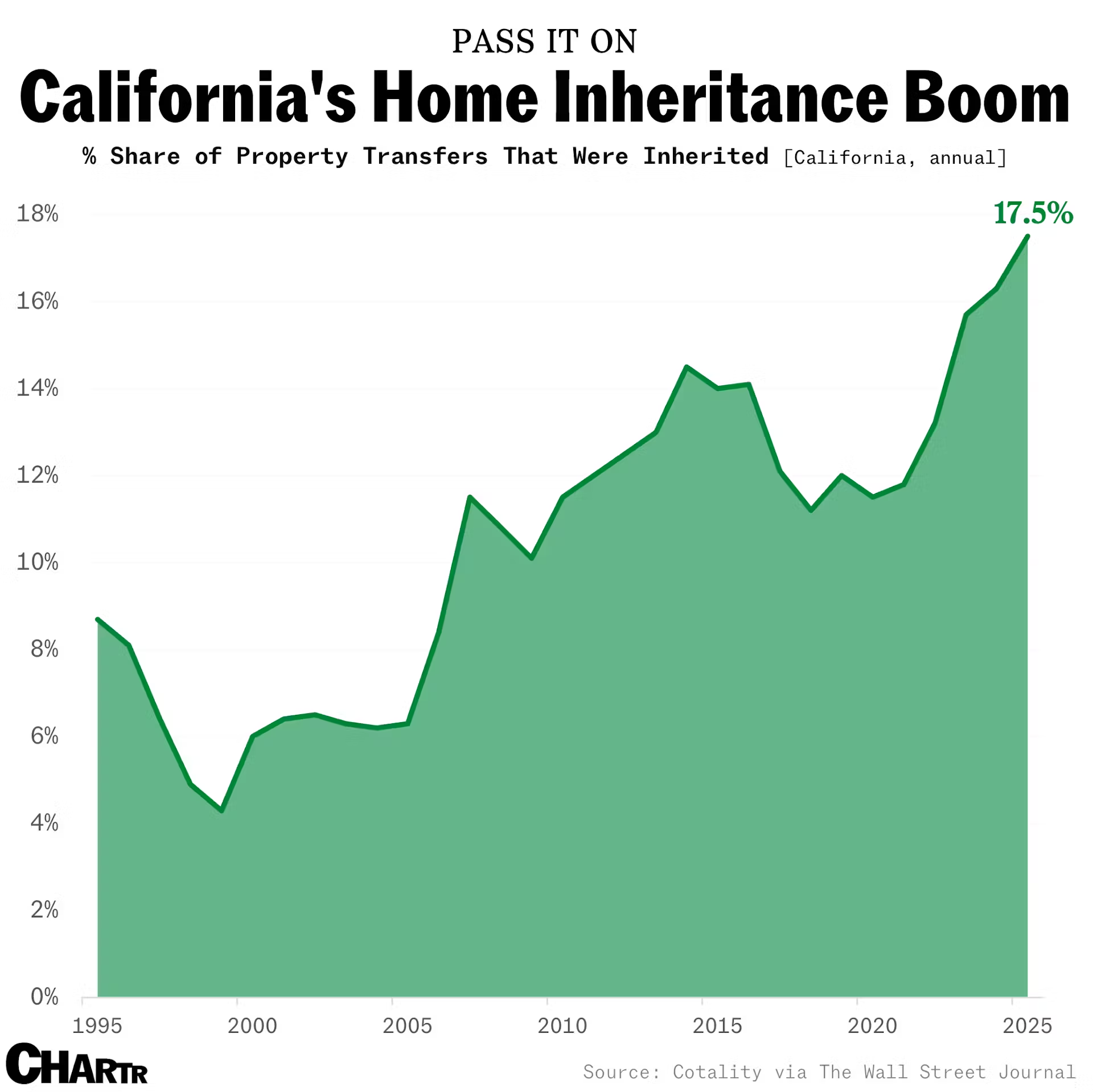
According to data from Cotality, highlighted recently in The Wall Street Journal, roughly 17.5% of home transfers in California last year were inherited. That means nearly one out of every five homes changing hands didn’t sell on the open market — they passed from one generation to the next.
To put that in perspective, the national average sits around 8.8%. California is literally double the rest of the country.
As someone who develops and invests in real estate, that number says a lot about where the market is — and where it might be headed.
The Shift From Ownership to Inheritance
If you go back about 30 years, the picture looked very different.
In the mid-1990s, only 8.7% of property transfers in California were inherited. The overwhelming majority of homes — nearly 88% — changed hands through traditional resale transactions. The rest came from new construction.
Today, the inheritance share has doubled.
That’s not just a statistic. It’s a signal that market access has fundamentally changed.
In a lot of California markets, the entry point has become so high that the most realistic way for younger buyers to own property is increasingly through family wealth transfer rather than market participation.
That’s a major shift in how housing markets function.
The “Stay Forever” Effect
Another factor driving this trend is how long Californians hold onto their homes.
According to data from Redfin, the average homeowner in the United States stays in their home about 12 years.
In California?
It’s closer to 20 years.
From an investor’s perspective, that kind of tenure dramatically reduces the amount of available inventory. When people hold onto homes for two decades — and often longer — fewer properties circulate through the market.
And when fewer homes trade, prices tend to move in only one direction.
The Proposition 13 Lock-In
You can’t talk about California real estate without mentioning Proposition 13.
Passed in 1978, the law capped annual property tax increases at 2%, regardless of how quickly home values rise. For homeowners who bought decades ago, that means they’re often paying a fraction of the property taxes someone buying today would face.
The result is what economists call a lock-in effect.
If you bought a home in California in the 1980s or 1990s, selling it today could mean:
- Giving up a very low property tax base
- Paying significantly higher taxes on the next property
- Potentially triggering capital gains exposure
So instead of selling, many owners simply stay put — sometimes for life.
And when that happens, the home often transfers to the next generation.
Why Families Keep the Property
There are also strong financial incentives for heirs to hold onto inherited homes.
For one, inherited property generally receives a step-up in cost basis, which can significantly reduce capital gains taxes if the property is eventually sold.
In some cases, heirs may also retain favorable property tax treatment, though California tightened those rules in 2021.
Between tax advantages, appreciation, and the simple emotional attachment families have to long-held homes, the result is a growing “keep it in the family” dynamic.
What This Means for the Housing Market
From a developer’s perspective, trends like this highlight something I talk about often: housing supply is structurally constrained in many major markets.
When you combine:
- Long holding periods
- Tax policies that discourage selling
- Limited new construction
- And rising costs of entry
You get a market where ownership becomes increasingly tied to existing wealth rather than new opportunity.
And that has ripple effects.
It makes workforce housing harder to deliver. It raises barriers for first-time buyers. And it changes the way real estate circulates through the economy.
The Bigger Picture
Real estate has always been one of the most powerful wealth-building tools in America.
What’s interesting now is how that wealth is moving.
In places like California, it’s increasingly moving through inheritance rather than transactions.
For investors and developers, that shift matters. It shapes where new housing gets built, how capital flows into markets, and where opportunities emerge.
The California dream hasn’t disappeared.
But in many cases, these days, it’s being passed down rather than bought.


Comments
Post a Comment