The Great Ski Recalibration: Why "Low-Key" is the New Luxury in Mountain Development
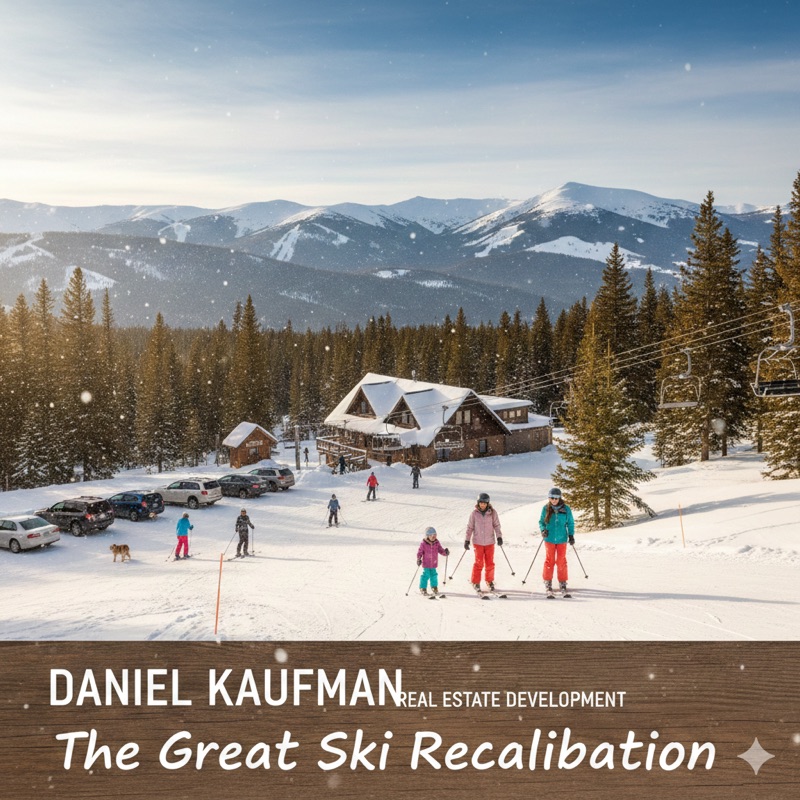
For over a decade, the gold standard for a ski vacation was meticulously groomed runs, white-glove service, and the prestige of "marquee" destinations. But this winter, a significant shift is occurring. Even the most loyal patrons of resorts like Deer Valley are rerouting their annual trips.
The reason? A growing sense of "price fatigue" that is fundamentally changing the economics of mountain recreation—and, by extension, the real estate and development landscape surrounding it.
The $300 Ceiling: When Skiing Becomes a Calculation
We are witnessing a "recalibration" of the American ski experience. At top-tier resorts, peak-day lift tickets now routinely hit $340. For a family of four, that’s over $1,300 before you’ve even buckled a boot.
As a developer, I see more than just inflation here; I see a shift in consumer psychology. When the price point reaches a certain threshold, the "vibe" changes. You aren't just skiing anymore; you’re justifying the expense every minute you’re on the hill. This has created a massive opening for "pressure valve" mountains—smaller, often independent resorts that offer what the corporate giants cannot: breathing room.
The Rise of the "Indie" Alternative
While Vail Resorts (Epic Pass) and Alterra (Ikon Pass) have built impressive global networks, their "Disney-model" pricing—high walk-up rates designed to force early pass sales—is driving a surge toward the Indy Pass and independent gems.
In the West, locals are swapping the congestion of Park City for the steep terrain and $137 tickets at Brighton or Solitude. In the East, families are ditching the $1,050 Epic Pass commitment for the "lighter" feel of Bolton Valley or Saddleback.
Why this matters for real estate:
Accessibility over Aspiration: Buyers are looking for properties near mountains where they don't feel "rushed" to get their money's worth.
Community Authenticity: There is a premium being placed on "slow lifts and good vibes." People want to pull into a parking lot where neighbors say "hi," not where they pay $50 for a spot.
Stable Rental Demand: Smaller mountains often have a more consistent local and regional draw, reducing the volatility seen in "destination-only" luxury markets.
Destinations Delivering Value (and Development Potential)
If you’re looking at where the smart money—and the authentic ski culture—is moving, keep these "low-key" powerhouses on your radar. Many are currently undergoing significant infrastructure upgrades that signal major investment potential.
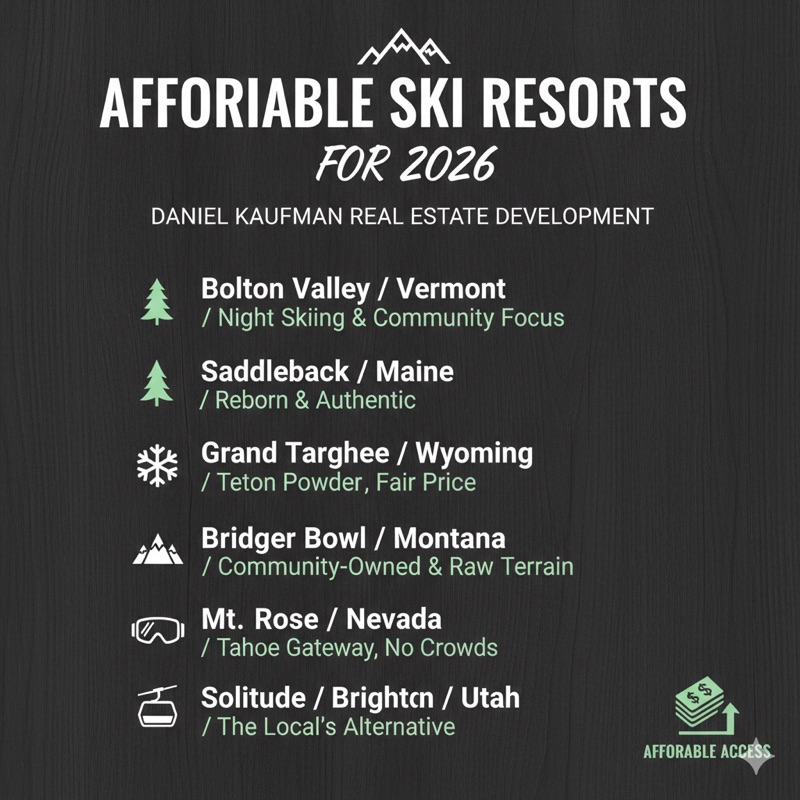
Bolton Valley | Vermont | ~$99 | The Night-Skiing Edge: With Vermont's "Homes for All" 2026 initiative, there’s an opening for infill housing and workforce-focused condos that leverage Bolton’s rare night-skiing culture.
Saddleback | Maine | ~$99 | The New Era: Currently developing "Alpine Village" and modern A-frame communities. This is the largest independent mountain in the East, offering rare ski-in/ski-out lot availability in 2026.
Grand Targhee | Wyoming | ~$125 | Base Area Modernization: Currently submitting plans for a new 135-room hotel and condos. It offers a Teton-quality experience at a fraction of Jackson Hole’s entry price. |
Bridger Bowl | Montana | ~$84 | Community Stability: Fiercely independent and community-owned. Investment here is focused on the "missing middle"—workforce housing that keeps the local economy thriving.
Mt. Rose | Nevada | ~$139 | The Tahoe Pressure Valve: As Lake Tahoe becomes increasingly priced out, Mt. Rose serves the Reno influx. Look for residential opportunities in the Reno-Tahoe corridor. |
Solitude/Brighton | Utah | ~$99+ | The Canyon Alternative: As Park City hits capacity, Big Cottonwood Canyon real estate remains a high-demand alternative for those prioritizing "snow over show." |
The Development Opportunity: Thinking Beyond the Lodge
The "Disney-fication" of major ski resorts is creating a two-tiered system. While the ultra-luxury market will always exist, the "long-term health" of the sport depends on the middle ground. For developers, the opportunity isn't necessarily in the next $300-a-day mega-resort. It’s in community-centric development:
Workforce Housing: Projects like "Cold Smoke" in Big Sky are proving that community land trusts and resilient materials can deliver profitable, essential housing for the people who actually run the mountains.
Year-Round Amenities: Independent mountains are pivoting to four-season models. We’re seeing a surge in demand for properties with direct access to Nordic trails, mountain biking, and wellness facilities.
Sustainable Infrastructure: Modern buyers in 2026 prioritize energy efficiency and "climate-fit" materials. Saddleback’s solar farm partnership is a prime example of how sustainability can lower operational costs and attract eco-conscious investors.
The Bottom Line
The "Great Recalibration" is a reminder that value and luxury aren't always the same thing. As we look at future development, the most resilient assets will be those that keep skiing integrated into family life rather than a high-stress financial calculation.
Looking to invest in a mountain getaway that feels like home instead of a transaction? Let’s chat about which emerging "indie" markets are showing the most promise for long-term value.
Investing in Ski Properties in 2026
This video provides a strategic framework for evaluating alpine real estate in 2026, highlighting the importance of developer track records and wellness facilities—key factors for the "low-key" resorts mentioned above.
Ready to find your foothold in the next great mountain market? The "Great Recalibration" is creating windows of opportunity in markets that were overlooked just five years ago. Whether you’re looking for a legacy family property or a strategic development site, I’m here to help you navigate the shifting peaks of 2026.

About Daniel Kaufman
Real Estate Developer | Mountain Enthusiast | Community Advocate
Daniel Kaufman is a seasoned real estate developer dedicated to creating spaces that balance modern living with the authentic spirit of the Great Outdoors. With over two decades of experience in residential and commercial development, Daniel has built a reputation for identifying emerging markets and "pressure valve" locations that offer long-term value and genuine community character.
An avid skier who has spent decades exploring both marquee destination resorts and tucked-away independent hills, Daniel brings a unique "boots-on-the-ground" perspective to his work. He believes that successful mountain development isn't just about high-end amenities; it’s about preserving the "soul" of the mountain while ensuring sustainable, accessible growth for future generations.
When he isn’t analyzing market trends or walking a potential project site, you can find him hunting for fresh tracks at a local hill or advocating for "missing middle" workforce housing in alpine communities.


Comments
Post a Comment