Reimagining Vermont Ski Real Estate: A Transformative Opportunity for Developers and Investors
Daniel Kaufman | Real Estate Developer
As a real estate developer focused on creating value in resort communities, I’ve seen firsthand how thoughtful projects can deliver strong returns while addressing key industry pain points like workforce shortages, seasonal revenue dips, and overcrowding at mega-resorts.
Vermont’s ski market is booming. Major players like Killington are pushing forward with a $3 billion, 25-year village expansion that includes thousands of residential units, workforce housing commitments, and year-round amenities. Okemo’s base-area communities have driven impressive appreciation and occupancy under Vail Resorts. Smaller, underutilized mountains offer similar upside—at lower entry costs—with existing infrastructure ready for revival.
We’ve identified a promising mountain in Vermont for this transformative opportunity, and we’re actively exploring how to bring this vision to life. While we can’t disclose the specific location just yet (stay tuned—we’ll share more soon), the core plan aligns perfectly with reimagining skiing for a more sustainable, inclusive, and year-round future.
Why This Approach Could Truly Change Skiing—and Deliver Investor Wins
This concept—revitalizing a smaller ski area with integrated housing, premium amenities, and multi-season appeal—could deliver robust ROI through property sales, professional rentals, and diversified operations.
Key investment highlights:
- Mid-priced townhomes ($400K–$600K range) clustered around the base target middle-market buyers and investors, filling the gap between luxury and entry-level. Pair with a boutique hotel and professional rental program for 70-80% occupancy targets, generating cash flow from day one.
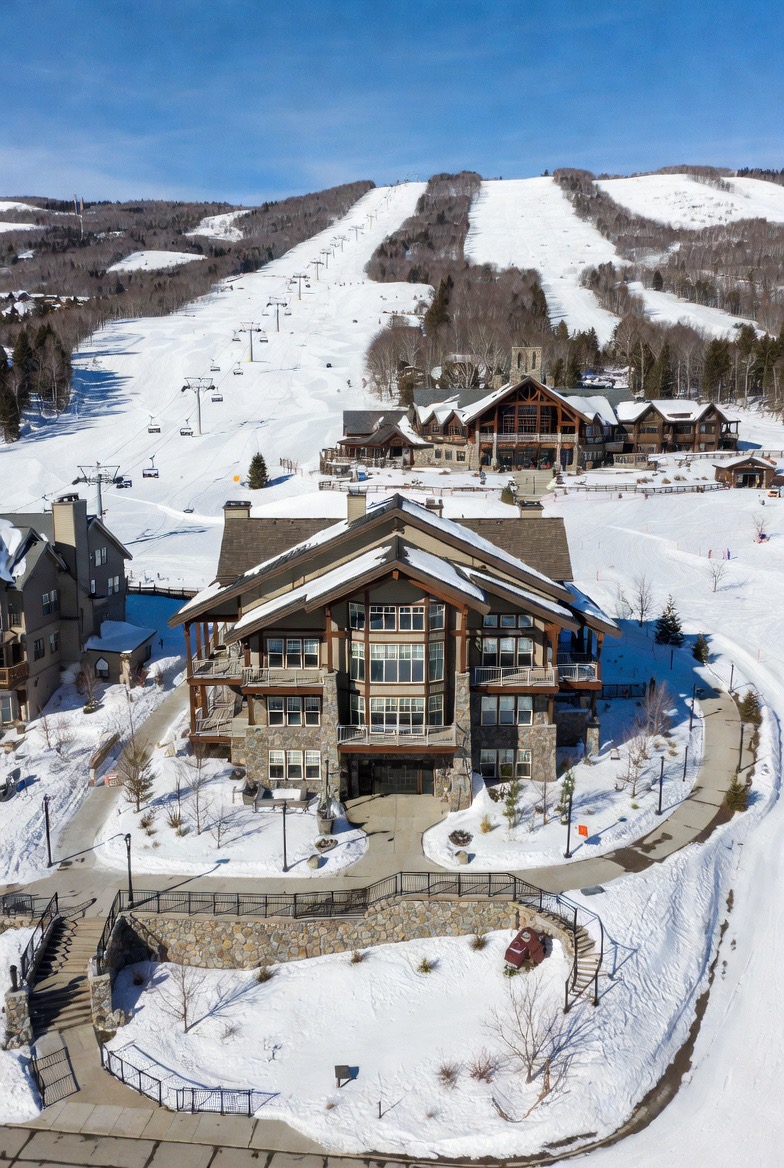
- Ski-in/ski-out single-family homes built higher up the mountain command premiums (comparable to Killington/Okemo listings at $1M+), appealing to affluent second-home owners seeking seamless access.
- Workforce housing across the street from the base solves a critical bottleneck—Vermont resorts face chronic staffing crises. This builds community goodwill, secures reliable talent, and may qualify for incentives.
- Base lodge clubhouse featuring event space, a chef-driven restaurant, and bar: Monetize through weddings, corporate retreats, and après-ski, adding strong non-ski revenue streams.
- On-mountain operations: Two efficient lifts servicing diverse terrain with 100% snowmaking coverage on 1,400 vertical feet (expandable to 2,000 ft in future phases). Low crowds = high guest satisfaction and repeat visits.
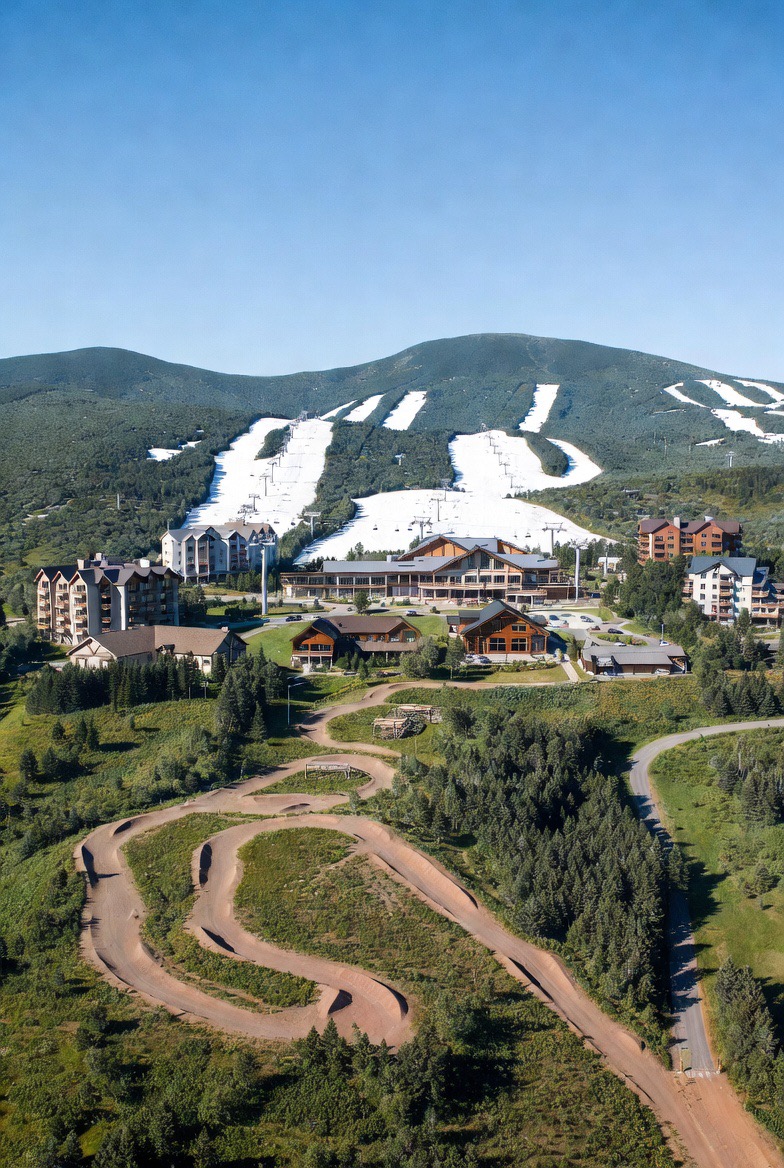
- Summer activation: Mountain biking trails and outdoor concert series transform the mountain into a four-season destination, turning fixed costs into profitable revenue (mirroring successes at Okemo and Mount Snow).
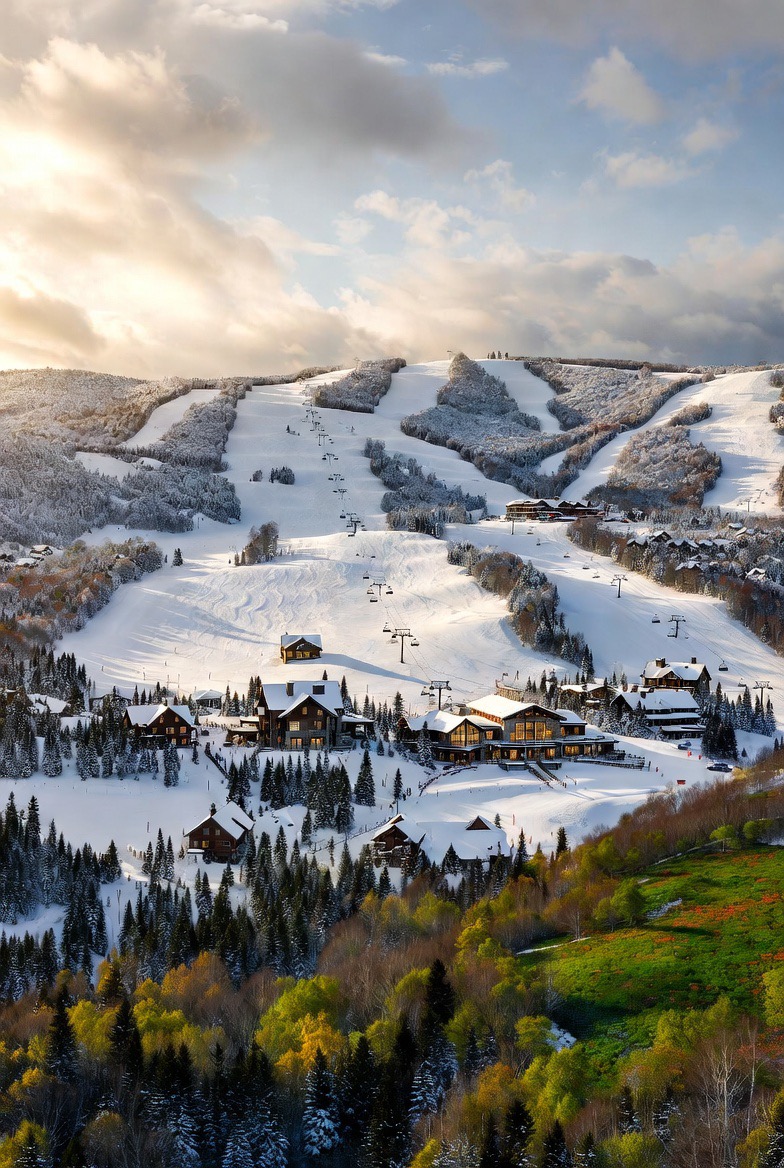
Here are some inspiring visuals:
True ski-in/ski-out homes deliver that magical, seamless mountain lifestyle:
Year-round vibes with summer mountain biking and outdoor events:
Private Club vs. Real Estate Amenity Model: Investor Perspectives
A pure private club model ($75K initiation memberships) provides exclusivity, predictable dues revenue (~$1M+ annually at scale), and minimal public operations hassle—ideal for high-net-worth stability. However, it can limit broader appeal and growth in community-focused Vermont.
The real estate-centric model (skiing as the star amenity) maximizes upside: Sell 50-100 units for $50M+ gross proceeds, rentals yield 5-7% cap rates, and semi-open access draws day-trippers. A hybrid approach—owner perks plus optional club tiers—could offer the best of both worlds.
Ideas to enhance returns:
- Phase financing: Sell townhomes first to fund lift upgrades and expansion.
- Sustainability edge: Incorporate green building, solar, and efficient snowmaking for ESG appeal and potential grants.
- Strategic partnerships: Explore ties to Epic/Ikon passes for broader marketing reach.
- Exit strategy: Strong potential for REIT or resort group acquisition post-stabilization.
This direction has blockbuster potential in Vermont’s thriving market—exciting times ahead for developers and investors who prioritize thoughtful, community-oriented projects.
What’s your take on financing structures, density targets, or key amenity must-haves? Share your thoughts as we prepare to reveal more details soon!
Daniel Kaufman
Real Estate Developer



Comments
Post a Comment