The 2025 Housing Turning Point: How Maine is Leading the National Shift Toward Affordability
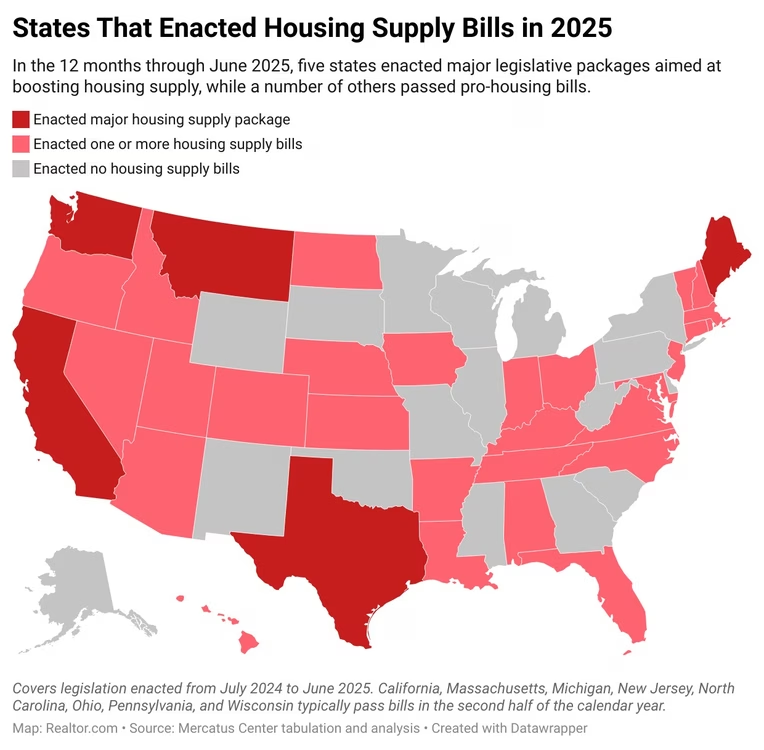
2025 has officially become a banner year for housing reform. Across the country, the conversation around the housing crisis has shifted from "if" we should build to "how fast" we can unlock supply to meet the needs of working families.
According to recent data from the Mercatus Center at George Mason University, state legislatures are finally stepping up. In the 12 months leading up to June 2025, 124 pro-housing bills were passed nationwide—a staggering jump from the 40 bills passed during the same period just two years ago.
"It’s been a phenomenal year for housing supply wins," says Salim Furth, director of the Urbanity project at Mercatus. From Texas to California, the momentum is moving toward density, transparency, and the fundamental right to build.
A National Wave of Reform
While every state faces unique challenges, the 2025 reforms centered on a few key "bottlenecks" that have historically stifled new development:
Texas: Passed seven significant bills, including the legalization of residential construction in commercial districts and the removal of petition processes often used to block new projects.
California: Finally addressed the "original housing crisis state" by exempting most urban infill projects from the vexatious environmental reviews that have been used for years to halt construction.
Montana & Washington: Both states took aim at "parking mandates"—the costly requirement to build massive parking lots that often kill the feasibility of affordable projects. Montana even became the first state to preempt local building height limits, requiring cities to allow 60-foot residential buildings in downtown zones.
Maine: Leading the Charge in the Northeast
While the national headlines often focus on the West Coast, Maine has quietly emerged as a pioneer in the fight for housing supply. The 2025 legislative session in Augusta delivered several "common-sense" wins that directly impact the feasibility of building in the Pine Tree State.
Maine’s latest reforms include:
Parking Minimum Caps: Mandatory parking is now limited to just one space per unit within locally designated “growth areas.” This is a game-changer for urban density, allowing developers to prioritize living space over asphalt.
Streamlined Approvals: The state has moved to remove redundant environmental approvals and limit the impact fees that often act as a hidden tax on new residents.
These changes aren't just bureaucratic tweaks; they are the essential tools needed to build our way out of a statewide shortage.
Why This Matters for Maine’s Local Economy
The economic stakes for these reforms couldn't be higher. In 2025, the median home price in Maine has hovered near $393,000, rising much faster than local wages. This gap has created a "worker shortage" that is actually a "housing shortage" in disguise.
When essential workers—teachers, first responders, and hospitality staff—can’t afford to live in the towns they serve, local businesses are forced to cut hours or close entirely. By unlocking the housing supply, Maine is doing more than just building roofs; it is stabilizing its labor force. Projections show that for every 100 affordable apartments built, millions are generated in local income and dozens of local construction jobs are created, providing a much-needed boost to municipal tax bases without overextending infrastructure.
Putting Reform into Practice: The Work at Oldivai
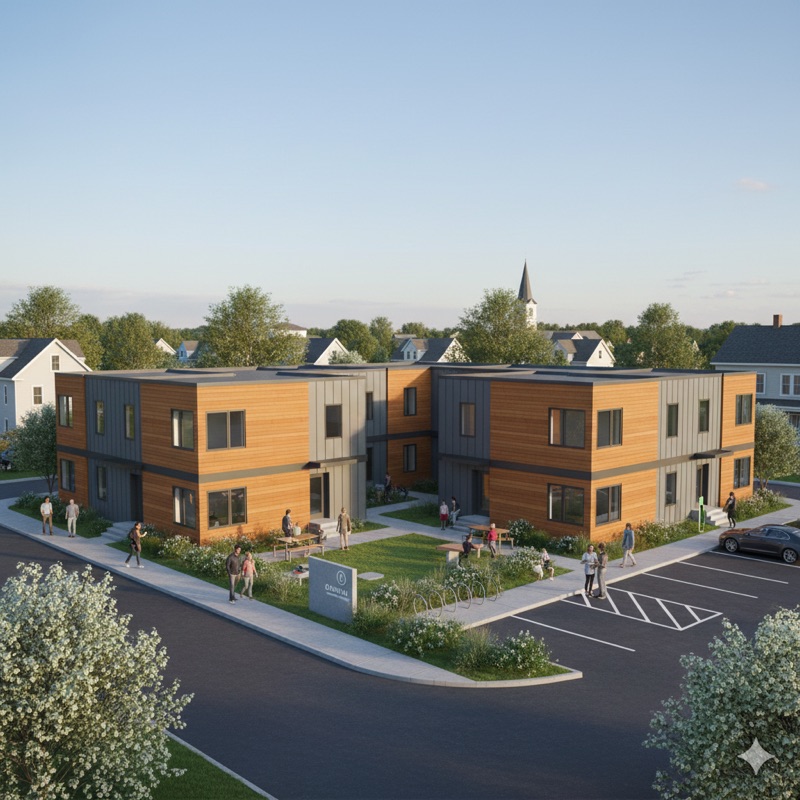
The timing of these reforms is critical for the mission my partners and I have at Oldivai. We are focused squarely on the "missing middle"—developing affordable and workforce housing for the people who keep Maine’s economy running.
At Oldivai, we are already leveraging Maine's new "growth area" designations to design projects that are both sustainable and attainable. For instance, our upcoming work—specifically targeting the Greater Portland and Lewiston–Auburn corridor—is designed to support the staff of nearby hospital systems and universities who have been priced out of the communities they serve.
Scaling with Industrialized Construction
By utilizing Maine's new limits on parking requirements and streamlined environmental paths, we are able to deploy our industrialized construction platform more efficiently. This model, which utilizes a "kit-of-parts" design approach, allows us to build with a precision and speed that traditional "stick-built" methods can't match.
By fabricating components in a controlled environment and assembling them on-site, we reduce waste, lower overhead, and significantly shorten construction timelines. This technology is what allows us to deliver 70–100 unit communities that would have been financially or logistically impossible under old zoning laws.
The Oldivai Workforce Housing Fund
To meet the scale of this challenge, we have established the Oldivai Workforce Housing Fund. This fund is dedicated to deploying capital into high-impact projects that take advantage of these new legislative tailwinds. By combining modern construction tech with a favorable regulatory environment, we are proving that workforce housing can be both a sound investment and a public good.
The tide is turning. Whether it’s a transit-oriented apartment in California or an Oldivai workforce community in the heart of Maine, the goal remains the same: Expanding supply is the only sustainable way to solve the affordability crisis.


Comments
Post a Comment